

Girl Scouts’ dreams are our dreams. A Girl Scout builds a better world—just as Girl Scouts have been doing for over a century. With programs coast-to-coast and around the globe, everyone can find their place in Girl Scouts and start creating the world they want to see.
Girl Scout Volunteers 
Girl Scout Grade Levels
Inclusion
The Girl Scout Leadership Experience (GSLE)
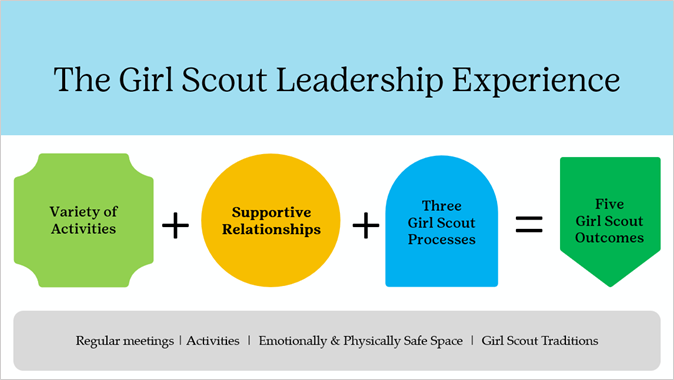
The Girl Scout Leadership Experience (GSLE) is our research-based impact model that describes what members do in Girl Scouts, who they do it with, how they do it, and how they benefit. When planning your year, make sure you’re implementing all parts of the GSLE regularly.
The Girl Scout Leadership Experience was designed to include a variety of fun and challenging activities to help Girl Scouts learn, grow, and thrive. These include activities associated with:
- National Program Portfolio (badges, awards, and patches)
- Outdoor and camping experiences
- Community service and Take Action projects
- Field trips and events
- Girl Scout Cookie Program
The GSLE also emphasizes supportive relationships, seen in how volunteers care for the Girl Scouts they lead—encouraging their creative thinking, honoring inclusion, and nurturing a safe space overall. As a result, Girl Scouts develop positive relationships with their peers and feel a sense of belonging. When Girl Scouts feel supported and safe, they’re more likely to achieve the five GSLE outcomes described below and, ultimately, reflect the Girl Scout mission.
The Girl Scout Leadership Experience draws on three unique processes that encourage Girl Scouts to try new things, write their own stories, and develop the skills and confidence to say, “I know I can do this!”
- Girl-led. Girl Scouts take the lead, no matter their age. From selecting badges to organizing activities, they gain confidence while following their dreams.
- Learning by doing. Participatory activities are fun for members of any age, but they also help Girl Scouts feel empowered to shape their own experience.
- Cooperative learning. Girl Scouts experience firsthand that teamwork, respect, and collaboration can fuel them through any challenge that comes their way.
As a volunteer, you’ll draw on these three processes as you lead Girl Scouts.
Naturally, “girl-led” at the Daisy level will look very different from girl-led at the Ambassador level. What’s most important is that your Girl Scouts make decisions about the activities they’ll do together and make choices as they’re doing the activities together. As they learn from their successful and not-so-successful tries, they gain confidence.
All Girl Scouts should have the opportunity to lead within their peer group. By the time they’re Cadettes, Seniors, and Ambassadors, they’ll be using the leadership skills they’ve developed to take on more ownership of their activities, mentor younger Girl Scouts, and take action to make the world a better place.
And finally, when a variety of activities, supportive adults, and the three Girl Scout processes are combined, Girl Scouts demonstrate the five GSLE outcomes:
- Strong Sense of Self. Girl Scouts have confidence in themselves and their abilities and form positive identities.
- Positive Values. Girl Scouts act ethically, honestly, and responsibly, and show concern for others.
- Challenge Seeking. Girl Scouts learn to take appropriate risks, try things even if they might fail, and learn from mistakes.
- Healthy Relationships. Girl Scouts develop and maintain healthy relationships by communicating their feelings directly and resolving conflicts constructively.
- Community Problem-Solving. Girl Scouts desire to contribute to the world in purposeful and meaningful ways, learn how to identify problems in the community, and create “action plans” to solve them.
One last tip: Tuning in to what interests your Girl Scouts and sparks their imaginations is much more important than completing all the activities on your list. Projects don’t have to come out perfectly—in fact, it’s a valuable learning experience when they don’t—and Girl Scouts don’t have to fill their vests and sashes with badges. What matters most is the fun and learning that takes place as they make experiences their own—so don’t be afraid to step back and let your Girl Scouts take the lead.
To learn more about the Girl Scout Leadership Experience, view our training on gsLearn.
Reflection
Progression
The Girl Scout Program: National Program Pillars
Important Differences: Patches, Badges, and Awards
Other Important Differences: Community Service and Take Action Projects
Traditions, Ceremonies, and Special Girl Scout Days
Highest Awards
Girl Scout Travel
© Copyright 2009–2026 Girl Scouts of the United States of America. All rights reserved. All information and material contained in Girl Scouts’ Volunteer Essentials guide (“Material”) is provided by Girl Scouts of the United States of America (GSUSA) and is intended to be educational material solely to be used by Girl Scout volunteers and council staff. Reproduction, distribution, compiling, or creating derivative works of any portion of the Material or any use other than noncommercial uses as permitted by copyright law is prohibited, unless explicit, prior authorization by GSUSA in writing was granted. GSUSA reserves its exclusive right in its sole discretion to alter, limit, or discontinue the Material at any time without notice.
